Emmanuel Razavi — What is the situation in Iran as we speak? What do Iranians hostile to the mullahs’ regime think of Donald Trump’s decision to accept a ceasefire?
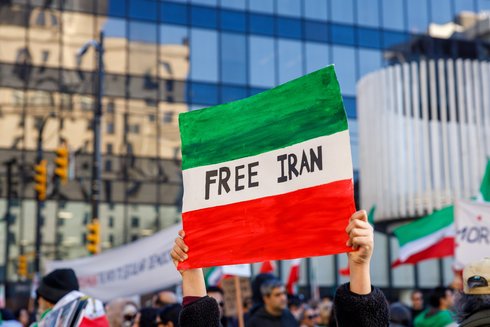
Hirbod Dehghani-Azar — Iranians hostile to the regime are experiencing a moment of profound bewilderment. They went through the war with the idea—sometimes articulated, often internalised—that this episode could be a historic breakthrough that would perhaps, "fast-forward" to the end of a system that had become unsustainable. A system of terror and corruption. This may seem incomprehensible from the outside. How can one imagine that people could still harbour hope amidst the bombs? To understand this, one must put oneself in the shoes of a people held hostage by a regime that has been crushing them for decades. In a way, one must think of what life was like in occupied France to grasp what the hope of liberation can mean in certain tragic circumstances.
Yet the ceasefire, or more precisely the halt to the bombing, did not bring freedom. Worse still, it allowed the regime to refocus its forces on internal repression. Fear, meanwhile, remained intact, even as hope receded. I recall a brief exchange of messages, on the very morning of the ceasefire, with an Iranian. He replied in two words: ‘So what?’ That said it all!
And, in many respects, the situation has got even worse. What Iranians fear today is the post-war period, with a humiliated, vindictive regime obsessed with internal purges. The internet blackout, extended on an unprecedented scale, is not a technical detail. It is an instrument of terror. It serves to isolate society, to prevent families from finding out what is happening, and to render arrests, disappearances and reprisals invisible. Out of sight, people are being killed, tortured, raped, maimed and humiliated.
Many Iranians are therefore disillusioned, exhausted and reeling. They endured the war in the hope of a political shift. Today, they find themselves still trapped under a regime that has been weakened but whose predatory and repressive tendencies remain intact.
E. R. — How does Iranian society view Israel? Is it keen on a peaceful relationship with the Jewish state, unlike the mullahs?
H. D.-A. — We must not lump Iranian society together with the regime that dominates it. Obsessive hostility towards Israel is not a natural product of Iranian history. On the contrary, it constitutes one of the ideological foundations of the Islamic Republic. The regime has turned the destruction of Israel into a narrative of legitimacy, almost a subsidiary political religion, by exploiting the Palestinian cause to justify its own abuses and by promoting an ideology of total jihad. But by no means does this imply that the Iranian people share this obsession.
A very large section of Iranian society aspires to just one thing: to live in peace, to live freely, to live normally in a country where the political and the religious are finally separated. Iranians …
This website is freely accessible. To continue reading, you need to register an account.
I already have an account
I create my account
This will be your personal account where you could consult anytime :
- Order history
- Links to purchased magazines, articles, or interviews
- Personal informations